AI-Assisted Campaign Ideation
Experimental Concept Study

Project Type: Self-Initiated (Fictional Retail Campaign)
Role: Digital Designer / Art Director
Objective: Explore an end-to-end Generative AI concepting pipeline to evaluate how an art director can rapidly deconstruct, scale, and stress-test a distinctive visual style across multi-channel retail touchpoints.
Core Tooling: Generative AI (Prompt Architecture & Visual Synthesis), Adobe Creative Cloud, Figma
01. The Experiment & Challenge
Rapid creative alignment
Seasonal retail campaigns typically require lengthy pre-production cycles to pitch and align on new illustrative styles. This self-directed experiment investigates how GenAI can serve as an agile visual co-pilot—not as a push-button replacement for design, but as a systematic tool for rapid prototyping, asset atomization, and commercial feasibility testing.
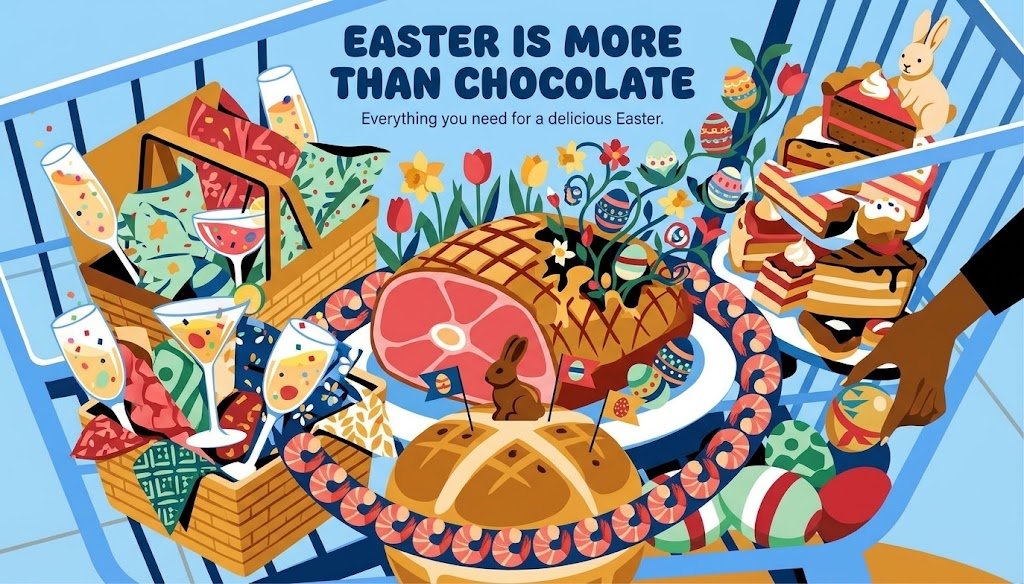
Fictional Brief: Develop a vibrant, contemporary supermarket campaign concept ("Easter is More Than Chocolate") that shifts the seasonal spotlight from confectionery toward savory entertaining, bakery, and fresh produce.
Visual Language: Bold flat vector forms, elevated top-down perspectives, strict geometric silhouettes, and a constrained four-color core palette (sky blue, mustard yellow, tomato red, and botanical teal).
03. The AI-Assisted Workflow
The AI-Assisted Concept Pipeline
Phase 1:
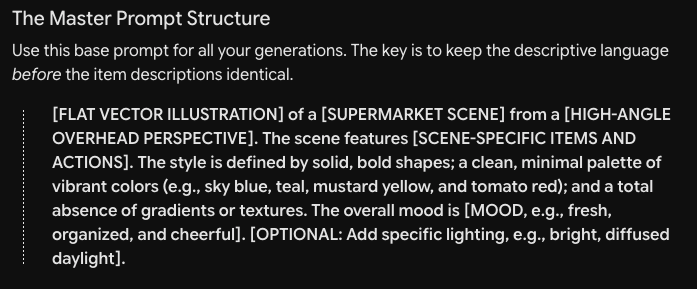
Style Deconstruction & Prompt Architecture
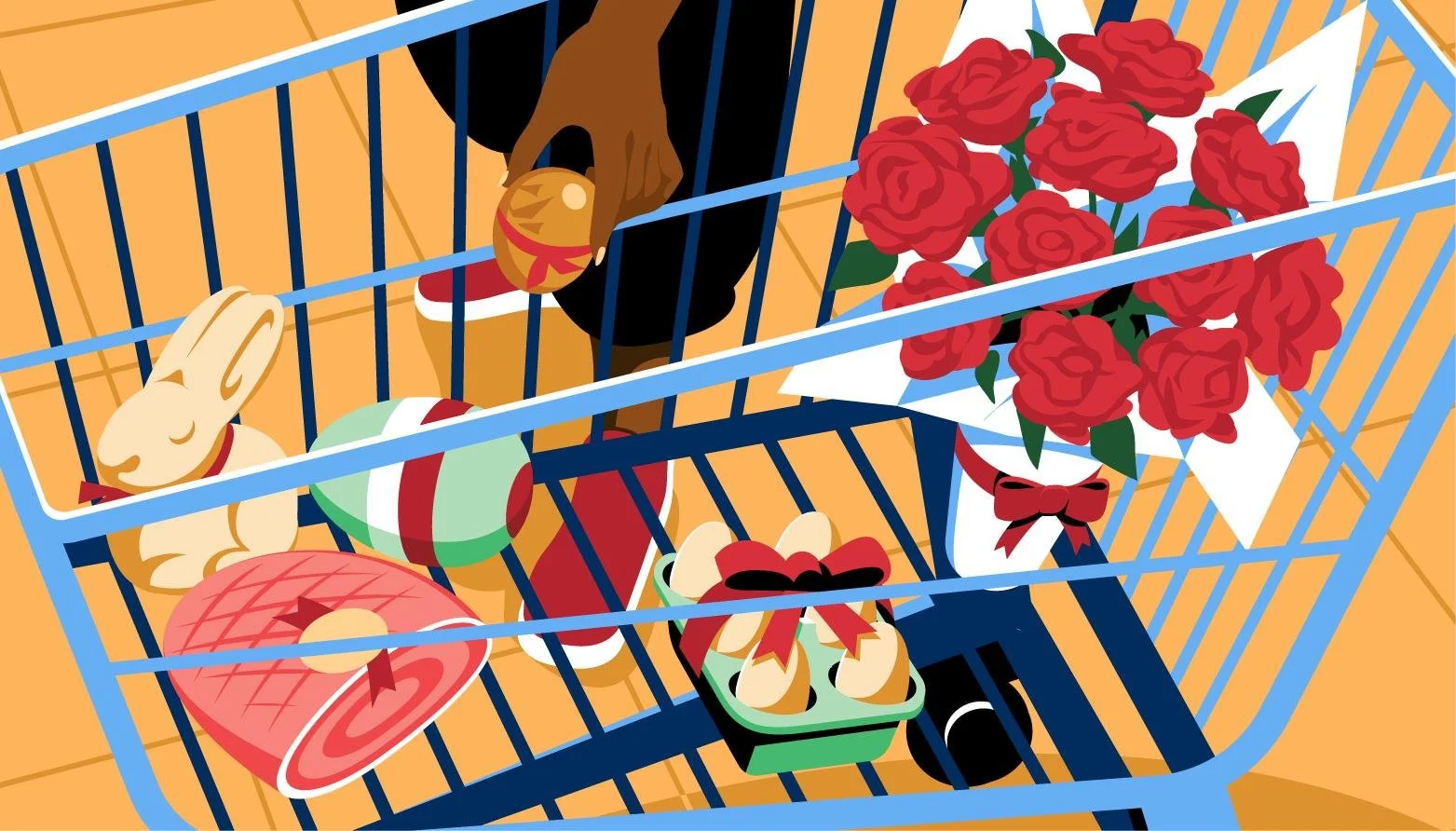
Analysed a seed vector illustration to isolate its core aesthetic parameters: camera angle, shadow treatment, line weight, and color values.
Tested a modular master prompt structure allowing consistent generation of entirely new product categories while preserving brand style fidelity.
Phase 2:
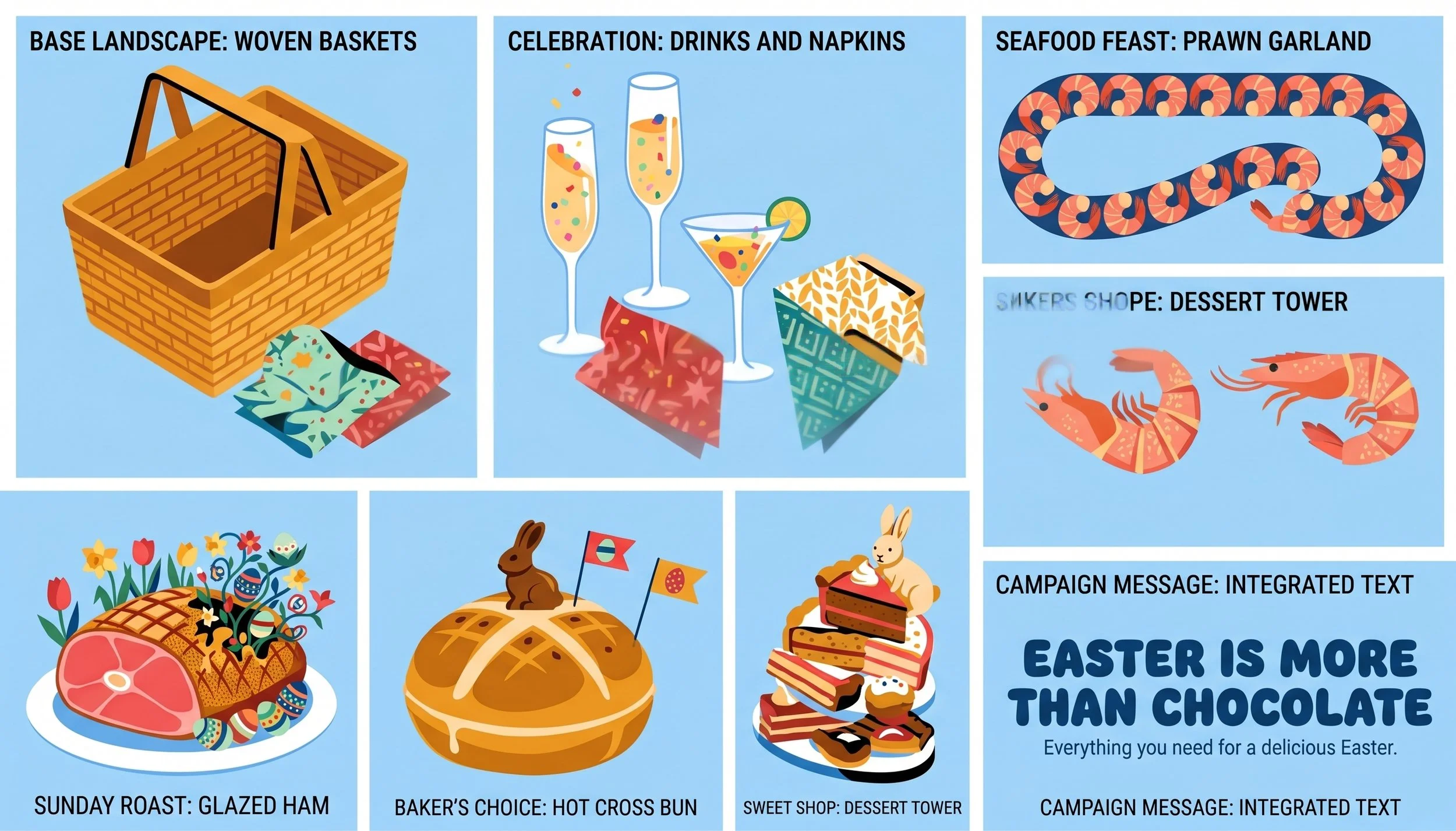
Asset Atomization & Component Isolation
Iteratively generated complex, multi-layered key visuals blending disparate Easter motifs (bakery, seafood, meats, florals).
Directing AI passes to extract and isolate individual modular assets (e.g., custom prawn garlands, standalone roast centerpieces, confectionery icons) for flexible graphic composition.
Phase 3:
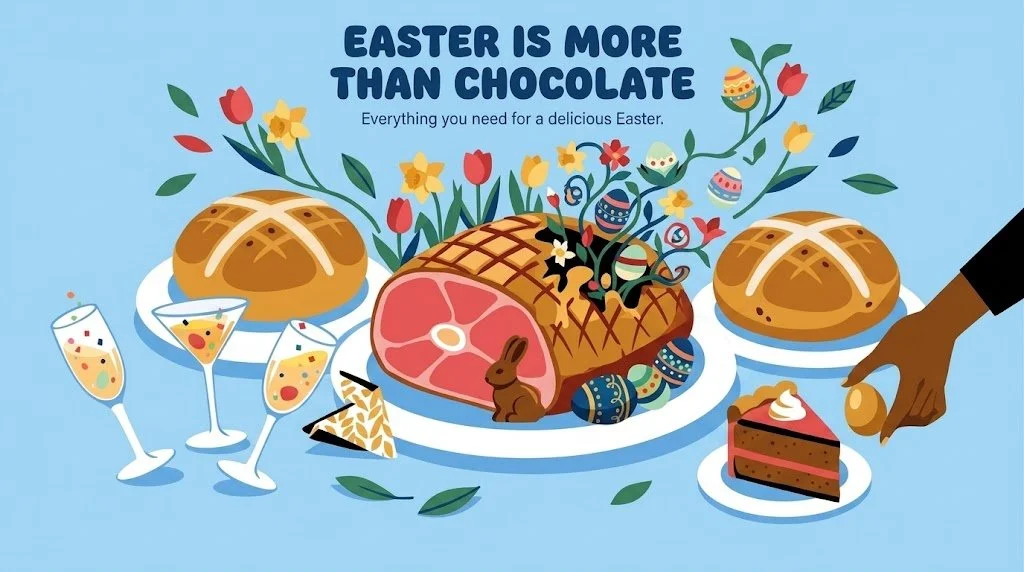
Compositional Iteration & Visual Hierarchy
Refined complex generative drafts into cleaner, copy-friendly hero alternatives to prevent visual clutter.
Tested spatial tension, focal balance, and contrast between primary marketing copy and illustrative elements.

Phase 4:
Multi-Channel Stress-Testing
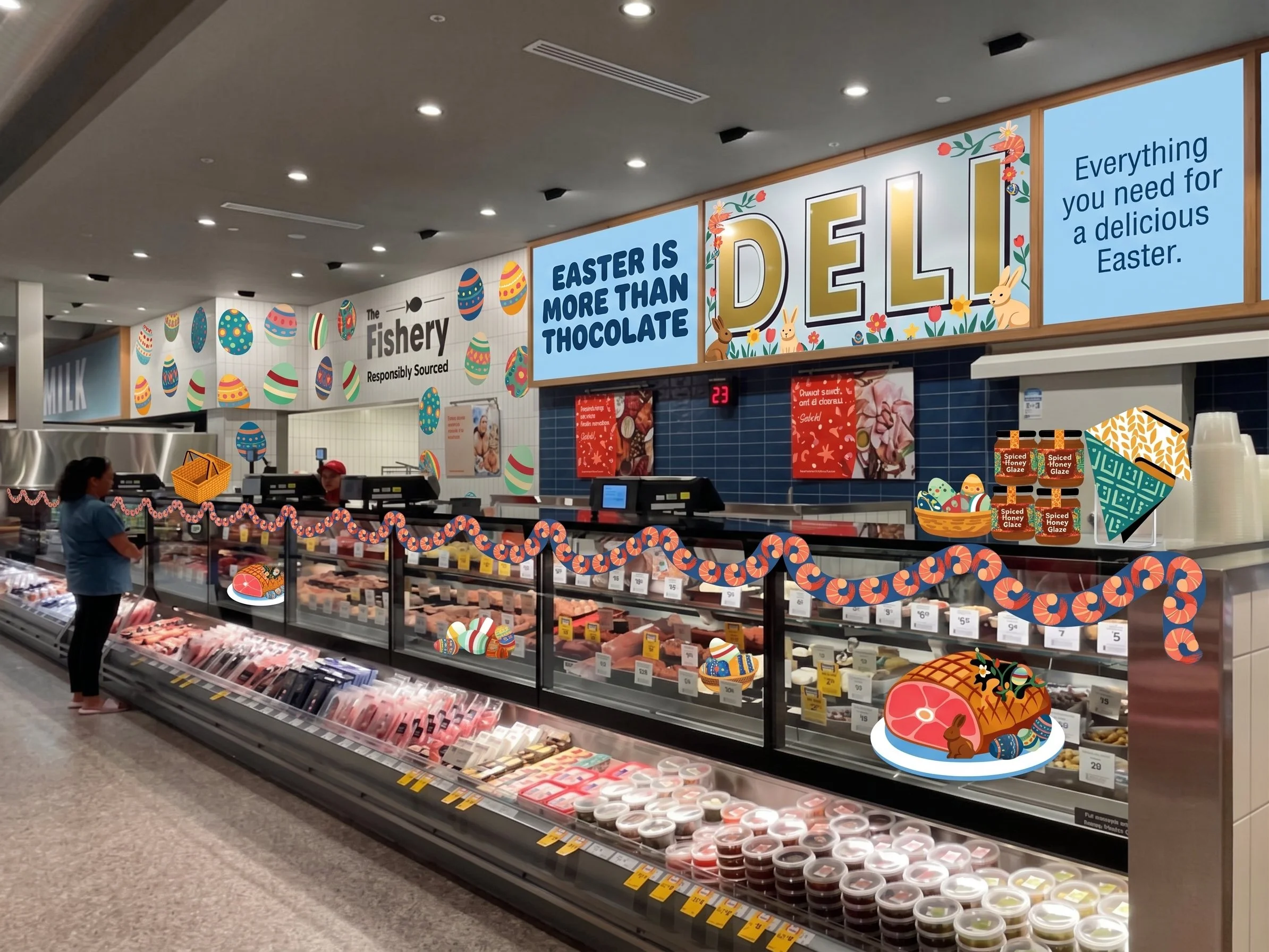
Simulated real-world commercial environments to validate the aesthetic across varied print, physical, and digital ratios:
Print & Publication: Mocked up weekly retail catalogue covers integrating price badges, typography hierarchies, and promotional lockups.
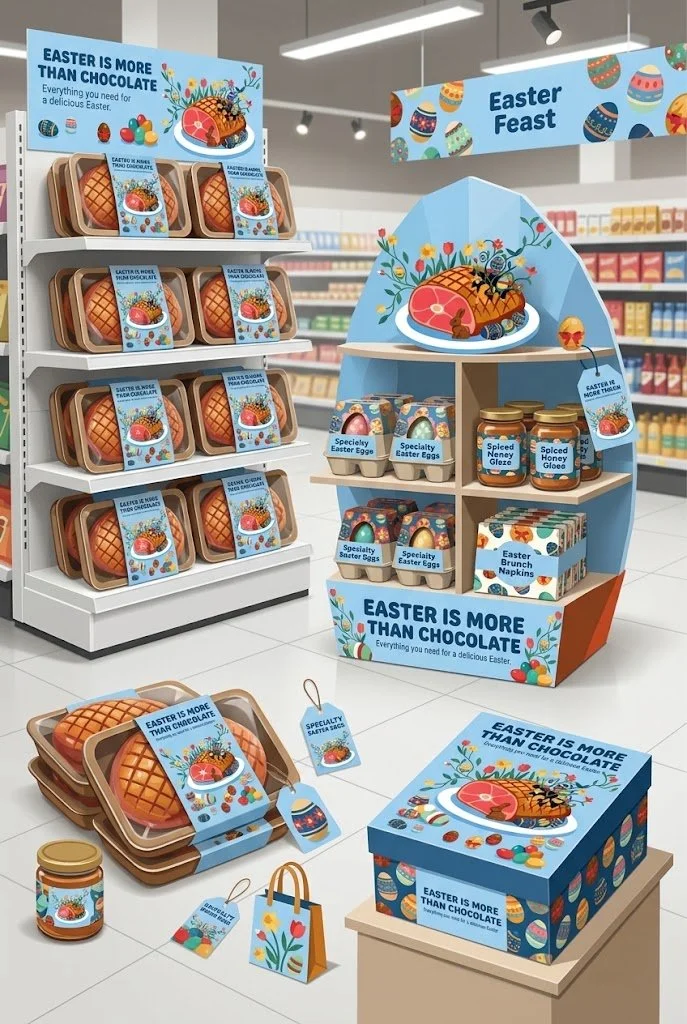
In-Store Activation: Visualized Point of Sale (POS) touchpoints, including deli counters, endcap displays, shelf-talkers, and perimeter garlands.
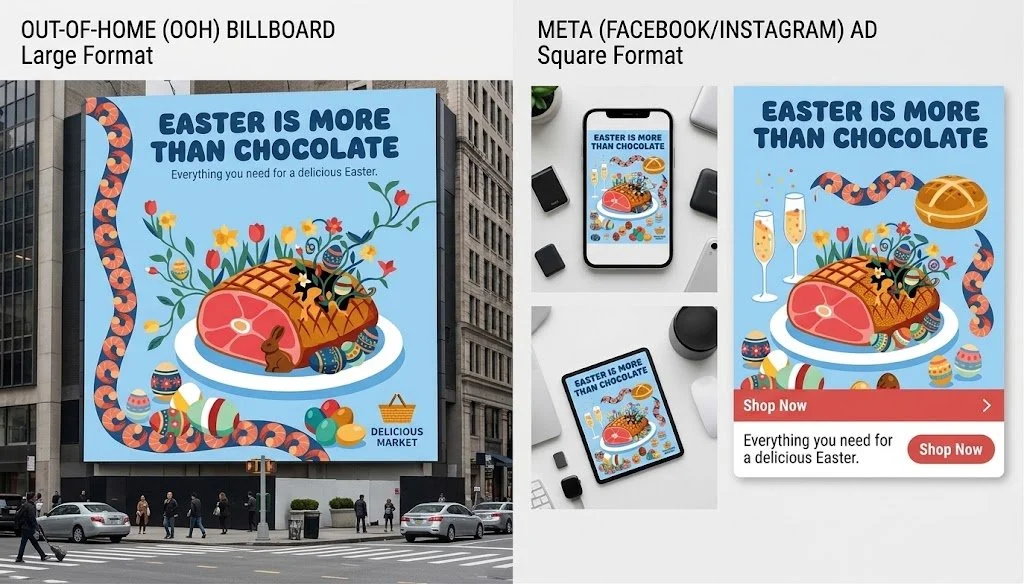
Out-of-Home & Paid Digital: Adapted layouts for large-format billboards and responsive Meta paid ad formats (1:1 and 9:16).